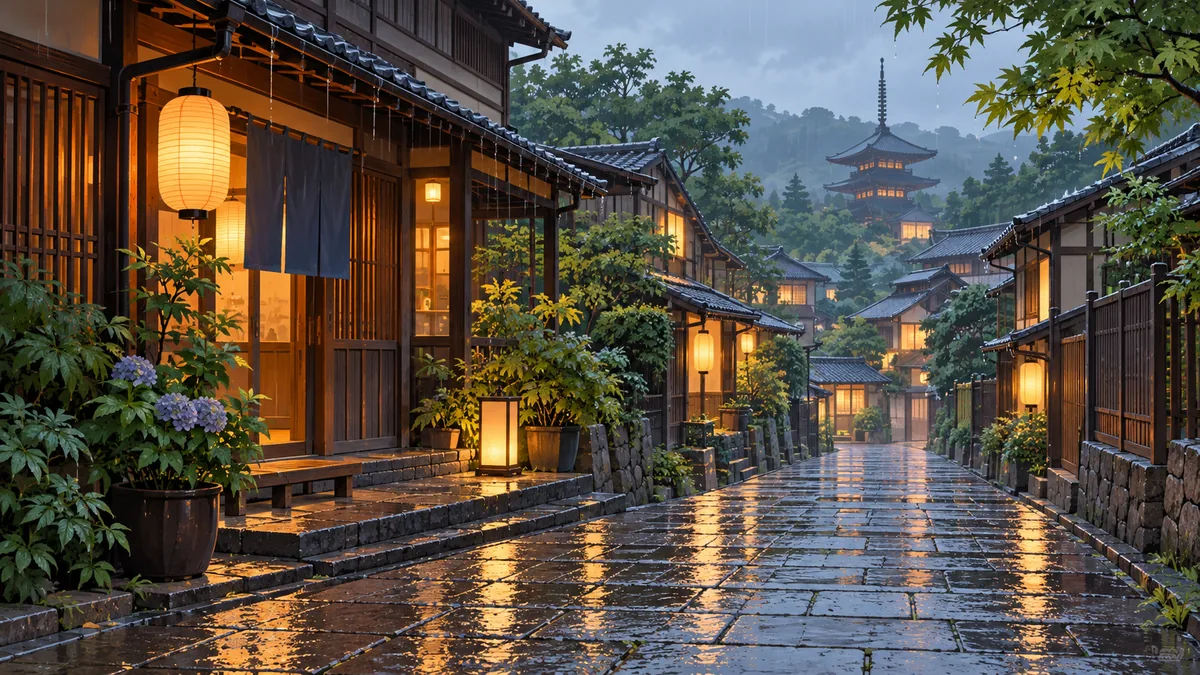
For a rainy day in Kyoto, choose one museum as your main stop, plan the journey to it, and leave a covered food stop optional. That gives you a usable day without committing to a cross-city circuit of attractions.
The aim is not to avoid every drop of rain. It is to spend less time making decisions outside a closed entrance or walking between places that only looked close on a map.
Start with the calendar
Before choosing a museum, check three things on its official website:
- Is it open on your visit date?
- Are the galleries or experiences you want actually available?
- What are the last-entry and ticket conditions?
A museum’s grounds being open does not always mean its indoor galleries are open. A special experience can also have different booking requirements from general admission.
Then pick one anchor:
| If you want… | Consider… | The important check |
|---|---|---|
| Art and cultural history | Kyoto National Museum | The exhibition program and whether galleries are open |
| Railway history and vehicles | Kyoto Railway Museum | Its opening calendar, last admission, and any separately booked experience |
Treat these as alternatives, not two compulsory stops.
Option 1: Kyoto National Museum
Kyoto National Museum is a good starting point if your interests lean toward art and cultural history. Its stated role includes collecting, preserving, and exhibiting tangible cultural properties; that does not tell you which objects will be on display during your trip. Check the museum’s current visitor information before building the day around it.
The museum normally closes on Mondays. When a national holiday falls on a Monday, the closure moves to Tuesday. Hours and admission vary with the exhibition program, so do not rely on a single year-round timetable or ticket price.
Pay particular attention to garden-only dates: the galleries are closed on those dates. Garden admission is not a substitute for an indoor museum visit when shelter is your main reason for going.
Option 2: Kyoto Railway Museum
For railway history, Kyoto Railway Museum offers a different focus, with historic vehicles and a model railway diorama. Its official visitor information currently lists opening hours of 10:00–17:00, with last admission at 16:30. Wednesdays are normally closed, but holiday and school-break exceptions apply. Check the current calendar and operating notices rather than treating the weekly pattern as a guarantee.
If the driving simulator matters to your visit, plan it separately: the museum says that experience requires an advance ticket. That is not a blanket statement that all museum admission must be booked in advance, and it does not promise that a simulator slot will be available.
The official access page estimates about a two-minute walk from Umekoji-Kyotonishi Station on the Sagano Line, compared with about twenty minutes on foot from Kyoto Station’s central exit. The shorter figure is the walk from the nearer station—not the train journey or your total door-to-door travel time. Neither estimate establishes a completely sheltered route.
Make Nishiki Market an optional food stop
Nishiki Market can be useful when you want a covered shopping and food stop. The market association describes its arcade roof as suitable for visiting in rain.
The cover ends at the market. It does not make your trip from a museum an indoor journey, and this plan does not assume Nishiki is next door to either museum.
There is also no single opening window that applies to every business. According to the market’s official FAQ, shops set their own hours and closing days. If a particular food shop is the reason for your detour, check that shop before setting off.
Follow the market association’s eating guidance: stop to eat at the business where you bought the food, rather than eating while walking through the arcade. Use the space the seller permits, and do not assume that a shop has seats.
Use a flexible sequence, not a minute-by-minute itinerary
A workable day can be as simple as this:
- Before leaving: confirm one museum’s actual program, calendar, and admission conditions. Save the address and a route from your starting point.
- Main visit: give that museum enough time instead of rushing toward a second booking. Include any separately ticketed experience only if you have checked its conditions.
- Food decision: choose a convenient meal, or make a separate trip to Nishiki if the shops you want are open and the transfer still feels worthwhile.
- Last stop: keep a short walk optional. If the weather or your energy does not suit it, finish the day without adding another destination.
This sequence is planning advice, not a timed transport route. You do not need to complete every step for the day to work.
Keep transfers and gear simple
Kyoto’s official transport guide recommends combining trains and buses. Look up the route for the places you actually choose, including the walking segments at both ends. Do not assume that a museum, a station entrance, and the market are connected under one roof.
Leave some slack between a timed entry and your next commitment. A route that looks efficient on a dry day may be less appealing when you are managing an umbrella and wet bags.
A few practical items can make that easier:
- An umbrella you can close and carry neatly inside.
- A light rain layer, adjusted to the season.
- A dry pouch or small bag for your phone and papers.
- Shoes you are comfortable walking in on wet surfaces.
- Saved ticket details, addresses, and an alternative route.
For seasonal clothing, check the city’s weather and clothing guidance. This article is not a forecast for your visit date.
Keep the rest of Kyoto for another day
Use our Kyoto attractions overview for broader sightseeing ideas, then verify the individual venues you decide to visit. If Kyoto is one part of a longer trip, our first-time Japan destination guide can help you consider the wider route.
For the rainy day itself, the useful decision is smaller: one confirmed-open main stop, a deliberate journey, and a food or walking option you are free to drop.
Official operating details and visitor guidance were checked on 1 November 2026. Check the linked operators again before travel; programs, tickets, and services can change.